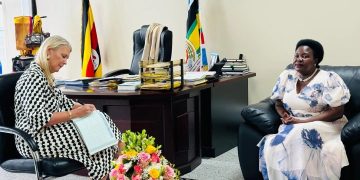
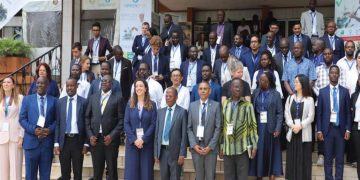
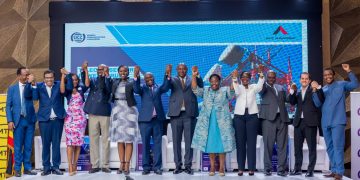


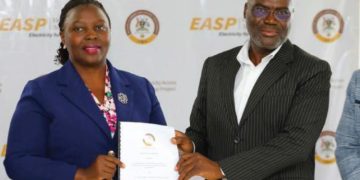
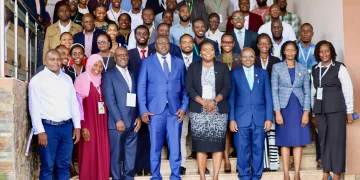
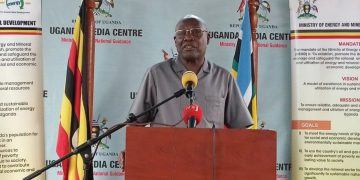

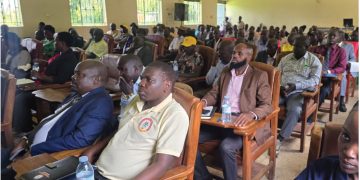
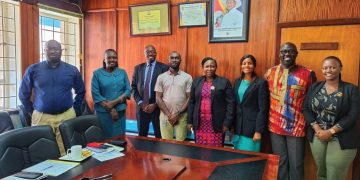
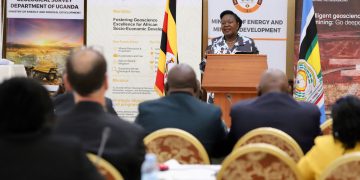
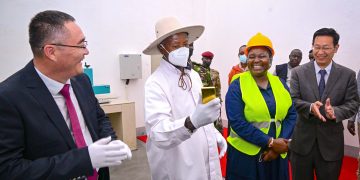
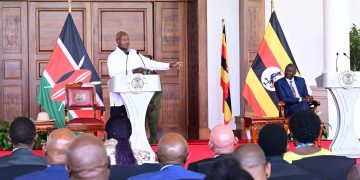
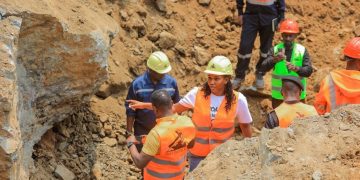
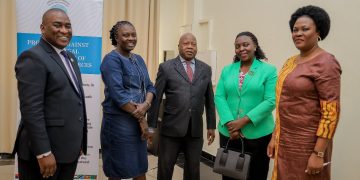

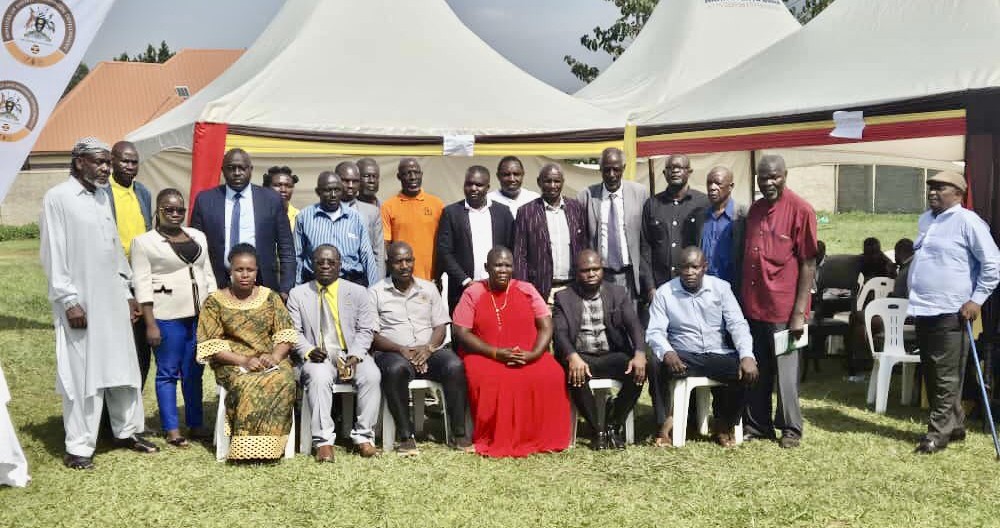
Busia District Headquarters, 30 September 2025: The Ministry of Energy and Mineral Development held a stakeholder engagement workshop to address persistent electricity challenges and chart solutions for rural electrification and energy access; themed: Harnessing Mining and Energy Resources for inclusive and Sustainable Development in Busia.
Eng. Abdon Atwine, Commissioner RuED-MEMD, started off by reporting that Uganda’s national electricity access now stands at 60%, up from under 20% a decade ago. With universal access targeted under Vision 2040, the ministry emphasized the need for greater efficiency, digitalization of service applications and payments, and stronger stakeholder collaboration to sustain momentum.
Following the updates, Busia community members voiced widespread concerns, including high power tariffs, damaged infrastructure, rampant power outages, and reliance on biomass. These challenges continue to disrupt health services, hinder business growth, and slow down local development.
Community representatives highlighted the impact of unreliable power on businesses and health services, with spoiled medical supplies and interrupted night operations reported. Heavy dependence on biomass and limited access to off-grid solutions were also noted as key barriers to sustainable energy use.
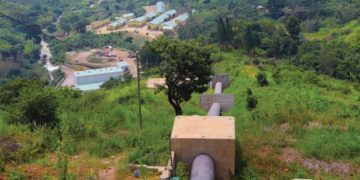
In response, Eng. Atwine outlined ongoing and planned interventions aimed at improving electricity access in Busia and nationwide. Recent projects, supported by the Government of Uganda, the World Bank, China Exim Bank, and KfW, have expanded transmission lines and installed new transformers across several sub-counties.
Eng. Isaac Sserukena, EASP coordinator, informed the gathering that further works under the Electricity Access Scale-Up Project (EASP) are expected to connect more than 9,000 households and institutions in the district. He, however, stated that EASP has struggles with material shortages, compensation delays, and funding gaps.
The UEDCL area manager, Mr. Awuzu Tom urged communities to eliminate illegal connections, embrace energy efficiency, and support project implementation. He highlighted stakeholder collaboration and additional investment as crucial to ensuring timely delivery of electrification projects that will drive economic growth, strengthen public services, and reduce reliance on biomass fuels.
Mr. Awuzu confirmed the ongoing emergency measures—including contracts with new suppliers and the airlifting of 90,000 meters— expected to close the gap. Off- grid solutions have, however, shown stronger performance, with more than 349,000 solar connections made, surpassing targets.
MEMD called for stronger stakeholder engagement and community cooperation. and that with additional investment, connections and infrastructural issues will be addressed, hence promoting energy efficiency.
The stakeholder engagements emphasize government’s commitment to transforming Busia’s and national electrification, highlighting how central electrification is to economic growth and reduced reliance on biomass.